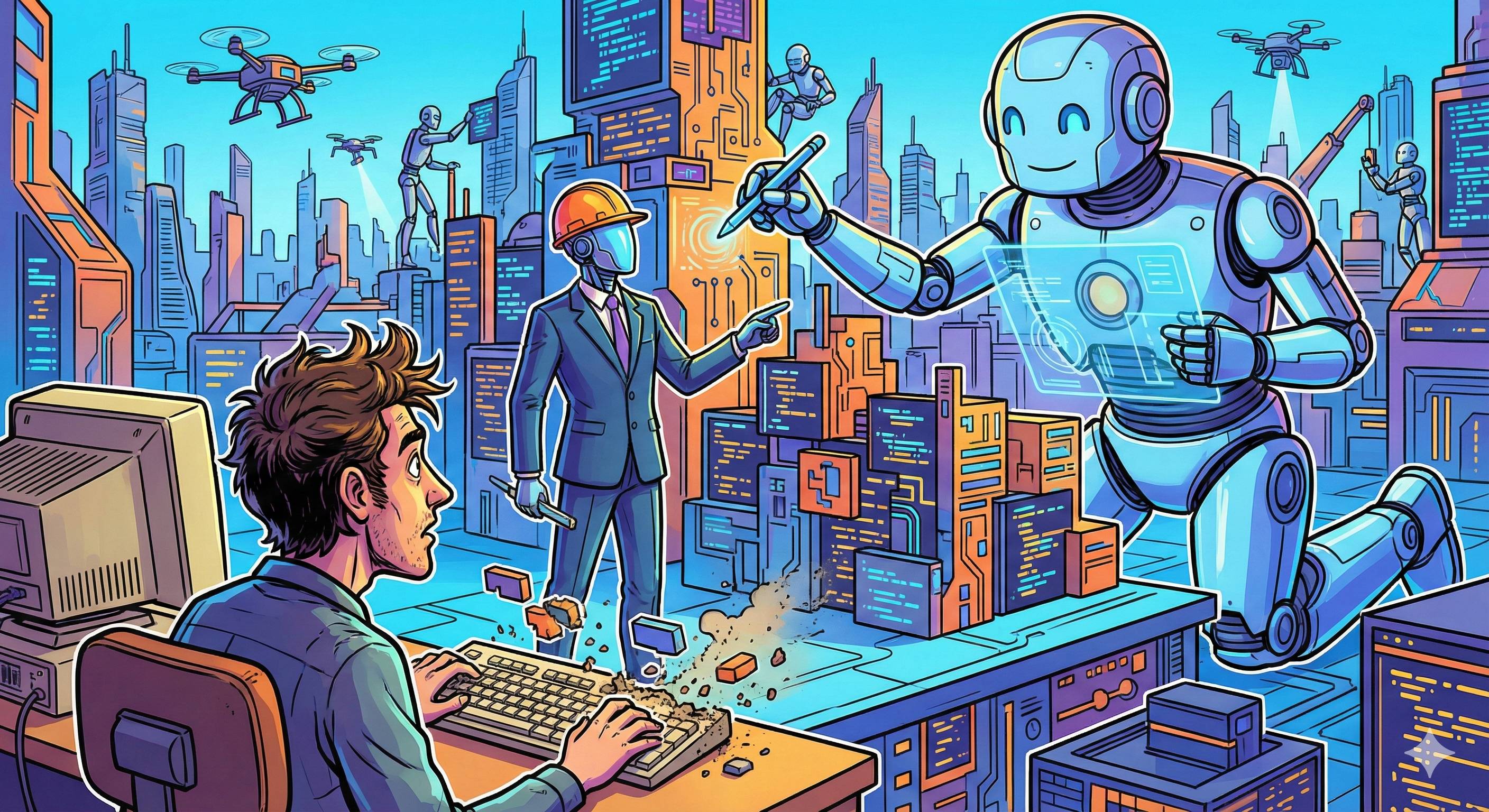
Imagine a world where writing lines of code is no longer the primary task of a software developer. Instead of debugging loops or wrestling with syntax errors, developers focus on designing systems, defining logic, and overseeing AI-driven tools that generate, optimize, and even debug code autonomously. This isn’t science fiction—it’s the emerging reality of software development in the age of artificial intelligence.
AI is reshaping the role of developers, shifting them from coders to architects. Traditional coding, as we know it, may not disappear entirely, but its dominance is being challenged by AI-powered tools like GitHub Copilot, Amazon CodeWhisperer, and AI-driven low-code platforms. These tools are automating repetitive tasks, accelerating development cycles, and enabling developers to focus on higher-level problem-solving.
In this post, we’ll explore how AI is transforming the developer’s role, why this shift is inevitable, and what it means for the future of software engineering. Whether you're a seasoned developer, a tech enthusiast, or a business leader, understanding this evolution is key to staying ahead in the rapidly changing landscape of technology.
The Rise of AI in Software Development
AI’s infiltration into software development isn’t new, but recent advancements in machine learning, natural language processing (NLP), and large language models (LLMs) have supercharged its capabilities. Tools like GitHub Copilot, powered by OpenAI’s Codex, can suggest entire functions, auto-complete code snippets, and even generate boilerplate code based on natural language prompts. Similarly, Amazon CodeWhisperer leverages AI to provide real-time code recommendations, while platforms like Replit Ghostwriter enable collaborative coding with AI assistants.
These tools are not just fancy autocomplete systems—they represent a fundamental shift in how code is written. Here’s how AI is changing the game:
- Automated Code Generation: AI can now translate high-level instructions (e.g., "Create a REST API endpoint for user authentication") into functional code in multiple programming languages.
- Bug Detection and Fixing: AI-powered tools like DeepCode and SonarQube analyze codebases to identify vulnerabilities, inefficiencies, and bugs before they reach production.
- Code Optimization: AI can refactor code for performance, readability, and maintainability, suggesting improvements that even experienced developers might overlook.
- Low-Code/No-Code Platforms: Tools like Microsoft Power Apps and OutSystems allow non-developers to build applications using drag-and-drop interfaces, further reducing the need for manual coding.
Why This Shift Is Inevitable
The adoption of AI in coding isn’t just a trend—it’s a response to several pressing challenges in the tech industry:
- Developer Shortage: The demand for software developers far outstrips supply. AI tools help bridge this gap by enabling fewer developers to accomplish more.
- Increasing Complexity: Modern applications are more complex than ever, integrating cloud services, microservices, and AI models. Managing this complexity manually is unsustainable.
- Speed and Efficiency: Businesses demand faster time-to-market. AI accelerates development by automating repetitive tasks and reducing human error.
- Cost Reduction: Automating coding tasks lowers development costs, making software projects more accessible to startups and small businesses.
From Coders to Architects: The Evolving Role of Developers
If AI is handling more of the "coding," what’s left for developers? The answer lies in elevation—moving from tactical execution to strategic oversight. Here’s how the role of developers is evolving:
1. System Design and Architecture
With AI managing the nitty-gritty of code generation, developers can focus on system design—defining how components interact, ensuring scalability, and architecting solutions that align with business goals. This includes:
- Designing microservices and APIs.
- Optimizing data flows and storage solutions.
- Ensuring security and compliance in distributed systems.
Developers are becoming software architects, responsible for the blueprint of applications rather than the bricklaying.
2. AI Prompt Engineering
A new skill is emerging: prompt engineering. Developers must learn how to effectively communicate with AI tools to generate the desired code. This involves:
- Crafting precise, unambiguous prompts.
- Iteratively refining AI-generated code.
- Understanding the limitations of AI tools to avoid errors.
Prompt engineering is becoming as critical as writing code itself, blending technical expertise with clear communication.
3. Quality Assurance and Governance
AI-generated code isn’t perfect. Developers must:
- Review and validate AI outputs for correctness and security.
- Implement governance frameworks to ensure AI tools adhere to coding standards.
- Monitor AI performance and bias in code generation.
This shift turns developers into quality gatekeepers, ensuring that automation doesn’t compromise reliability.
4. Collaboration and Integration
Modern development is highly collaborative. Developers now spend more time:
- Integrating AI tools into existing workflows (e.g., CI/CD pipelines).
- Collaborating with cross-functional teams (e.g., data scientists, UX designers).
- Managing AI-driven development environments.
The focus is shifting from solo coding to orchestrating teams and tools.
Will AI Replace Developers?
The million-dollar question: Is traditional coding dead, and will AI replace developers entirely? The short answer is no—but the role of developers will change dramatically. Here’s why:
AI’s Limitations
While AI excels at pattern recognition and automation, it lacks:
- Creative Problem-Solving: AI can generate code based on existing patterns but struggles with truly innovative solutions.
- Contextual Understanding: AI doesn’t grasp business logic or user needs the way humans do.
- Ethical Judgment: Decisions about data privacy, bias, and security require human oversight.
The Human Edge
Developers bring irreplaceable skills to the table:
- Domain Expertise: Understanding industry-specific requirements (e.g., healthcare, finance).
- Strategic Thinking: Aligning technology with long-term business goals.
- Adaptability: Navigating ambiguous problems and edge cases.
AI is a force multiplier, not a replacement. Developers who embrace AI will thrive, while those who resist may struggle to keep up.
How Developers Can Adapt to the AI Era
The transition from coder to architect requires upskilling. Here’s how developers can stay ahead:
1. Master AI Tools
Familiarize yourself with AI-powered development tools:
- GitHub Copilot, Amazon CodeWhisperer, Replit Ghostwriter.
- AI-driven testing tools like Testim or Applitools.
- Low-code platforms like Mendix or Appian.
2. Strengthen Soft Skills
Developers must hone:
- Communication: Explaining technical concepts to non-technical stakeholders.
- Collaboration: Working effectively in cross-functional teams.
- Leadership: Guiding projects and mentoring junior developers.
3. Focus on Architecture and Design
Invest time in learning:
- Cloud architecture (AWS, Azure, GCP).
- Microservices and containerization (Docker, Kubernetes).
- System design principles (scalability, fault tolerance).
4. Embrace Lifelong Learning
The tech landscape evolves rapidly. Stay updated by:
- Taking online courses (e.g., Coursera, Udacity).
- Attending conferences (e.g., AWS re:Invent, Google I/O).
- Experimenting with new tools and frameworks.
The Future of Software Development
The future of coding is augmented, not obsolete. AI will handle the repetitive, mechanical aspects of development, while humans focus on creativity, strategy, and innovation. Here’s what’s on the horizon:
- AI-Powered Development Environments: IDEs will evolve into intelligent collaborators, suggesting architectures and optimizing workflows in real time.
- Self-Healing Code: AI will monitor applications in production, automatically fixing bugs and performance issues.
- Democratized Development: Low-code/no-code tools will empower non-developers to build applications, expanding the definition of a "developer."
- Hyper-Personalized Software: AI will enable applications that adapt dynamically to user behavior and preferences.
Developers who adapt to this shift will find themselves in high demand, not as coders, but