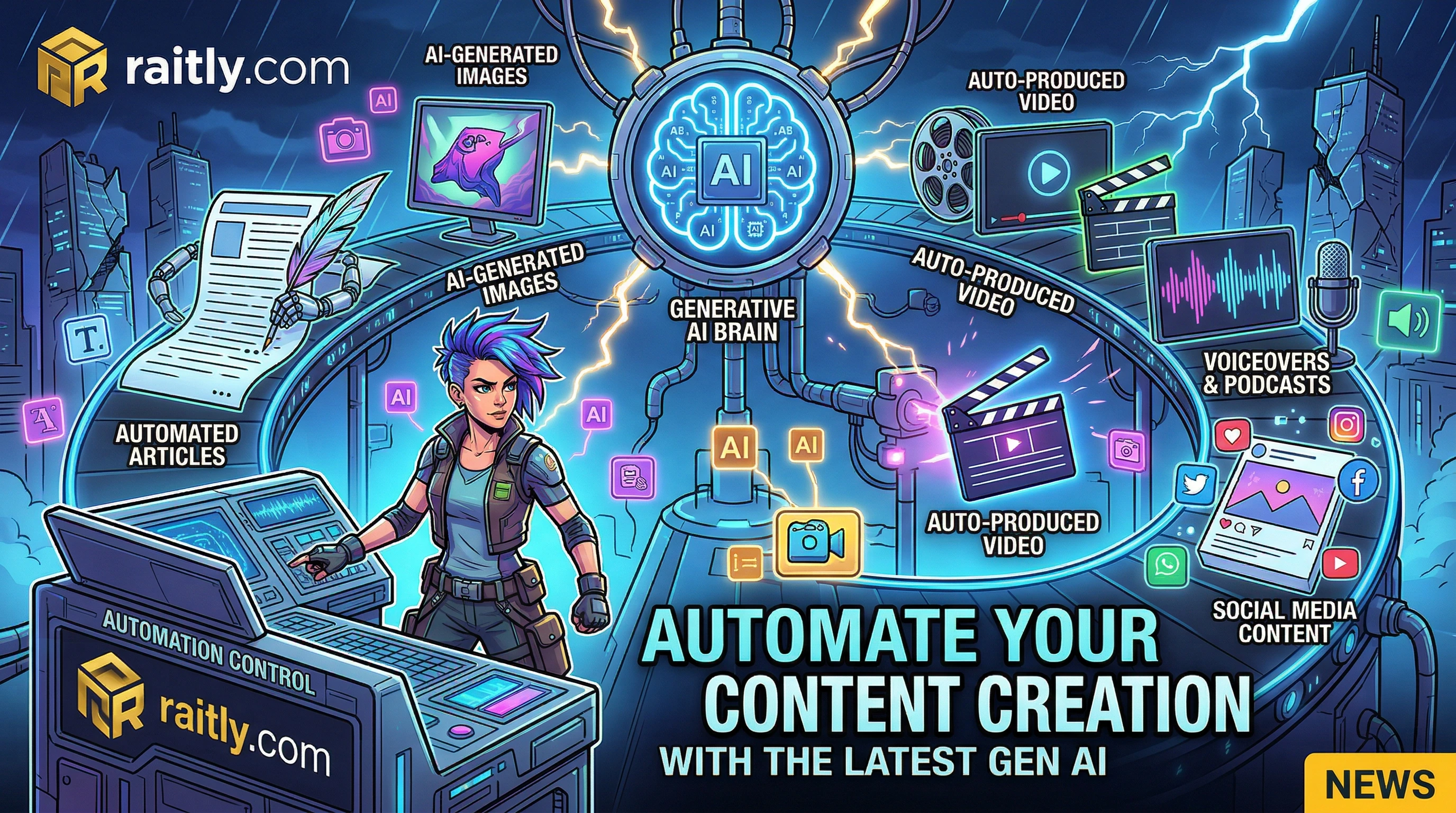
How to Automate Your Content Creation Using the Latest Generative AI
Introduction: The Content Creation Revolution
In the relentless pursuit of fresh, engaging, and valuable content, marketers, entrepreneurs, and creators are facing a universal challenge: the content treadmill is exhausting. Keeping up with blog posts, social media updates, email newsletters, and product descriptions can consume immense resources. But what if you could augment your creativity and scale your output without sacrificing quality? Enter the latest wave of generative AI. This technology is not about replacing human ingenuity but about automating the heavy lifting, freeing you to focus on strategy, nuance, and connection. This guide will walk you through how to effectively automate content creation using cutting-edge AI tools, transforming your workflow from a bottleneck into a well-oiled machine.
Understanding Generative AI for Content
Generative AI refers to artificial intelligence models, like Large Language Models (LLMs), that can create new, original content—text, images, code, and more—based on the patterns and information they've learned from vast datasets. Tools like OpenAI's GPT-4, Google's Gemini, Anthropic's Claude, and specialized platforms like Jasper and Copy.ai are at the forefront. These aren't just fancy spell-checkers; they are collaborative partners that can draft, brainstorm, reformat, and personalize content at an unprecedented scale.
The Strategic Framework for AI Content Automation
Successful automation isn't about pressing a button and publishing blindly. It requires a strategic framework to ensure the output aligns with your brand voice, goals, and audience expectations.
1. Define Your Content Pillars and Voice
Before you automate anything, clarity is key. Document your core content pillars (the main topics you cover) and establish a detailed brand voice guide. Is your tone professional, witty, compassionate, or bold? Providing this context to the AI is the single most important step for generating usable, on-brand content.
2. Choose the Right AI Content Tools
Not all AI tools are created equal. Your choice depends on your needs:
- All-in-One Writing Assistants: (e.g., Jasper, Writesonic) Ideal for marketing teams needing varied content types with built-in templates and brand voice memory.
- Foundation Model Interfaces: (e.g., ChatGPT Plus, Claude.ai) Offer maximum flexibility for brainstorming, drafting, and complex reasoning tasks. They require more detailed prompting.
- Specialized AI Tools: For SEO-optimized articles (SurferSEO, Frase), social media visuals (DALL-E 3, Midjourney), or video scripting (InVideo AI).
- Workflow Automation Platforms: (e.g., Zapier, Make) Connect AI tools to your CMS, social schedulers, and email platforms to create fully automated pipelines.
3. Master the Art of AI Prompting
The quality of AI-generated content is directly proportional to the quality of your prompt. Move beyond simple requests.
- Be Specific: Instead of "Write a blog about coffee," try "Write a 800-word beginner's guide to pour-over coffee brewing for a home enthusiast audience, focusing on equipment, technique, and bean selection. Use a friendly and educational tone."
- Provide Context: Include target audience, desired structure (listicle, how-to, opinion piece), keywords, and examples of your past work.
- Use Iterative Refinement: Treat the first output as a draft. Ask the AI to expand on points, shorten sections, or adjust the tone in follow-up prompts.
Practical Applications: What You Can Automate Today
1. Blog Post Ideation and Outlining
Beat writer's block instantly. Use AI to generate dozens of blog post titles based on a keyword, then command it to create a detailed outline with H2 and H3 headings, including key points for each section. This provides a solid skeleton for you or the AI to flesh out.
2. First Draft Generation
Feed your approved outline back into the AI, along with your brand voice instructions, to generate a complete first draft. This dramatically cuts down research and initial writing time. Remember, this is a draft—your expertise is still essential for adding unique insights, data, and final polish.
3. Social Media Content at Scale
Automate your social calendar. Generate a month's worth of post captions for different platforms (adjusting length and style for Instagram vs. LinkedIn), create relevant hashtag sets, and even draft engaging thread ideas for Twitter/X. AI can also repurpose a single blog post into multiple social snippets.
4. Email Newsletter Drafts
From compelling subject line options to personalized body content, AI can draft your entire email sequence. You can automate the creation of welcome series, promotional announcements, and educational nurture campaigns by providing the key messaging points.
5. Product Descriptions and Meta Content
For e-commerce sites with large inventories, manually writing unique descriptions is a nightmare. AI can generate hundreds of SEO-friendly product descriptions, meta titles, and meta descriptions in minutes, ensuring consistency and incorporating target keywords.
Optimizing and Humanizing AI-Generated Content
Automation doesn't mean "set and forget." To maintain quality and authenticity, a human-in-the-loop process is non-negotiable.
- Fact-Check Rigorously: AI can "hallucinate" or present outdated information. Always verify facts, statistics, and quotes.
- Inject Personal Experience and Brand Voice: Add your own stories, case studies, and nuanced opinions that the AI cannot replicate.
- Edit for Flow and "Human Feel": Read the content aloud. Smooth out awkward phrasing, add natural transitions, and ensure it connects emotionally with the reader.
- Optimize for SEO: Use SEO tools to ensure the AI-generated content meets best practices for readability, keyword placement, and semantic search. Tools like Clearscope or MarketMuse can guide both you and the AI.
Building an Automated Content Workflow
To truly scale, integrate your tools into a seamless workflow. For example:
- Ideation: Use ChatGPT to brainstorm topics based on SEO keyword research.
- Outline & Draft: Export ideas to Jasper for structured outlining and first-draft generation using your saved brand voice.
- SEO Optimization: Run the draft through Frase to optimize for target keywords and questions.
- Editing & Approval: Human editor reviews, adds expertise, and finalizes in Google Docs.
- Publishing & Distribution: Use Zapier to automatically post the approved content to your WordPress site and schedule social promotions via Buffer.
Ethical Considerations and Best Practices
As you embrace AI content automation, proceed with responsibility.
- Transparency: Consider disclosing AI use if appropriate for your audience and industry.
- Originality: Use AI as a tool for creation, not plagiarism. Ensure the final output is unique and adds value.
- Quality Over Quantity: Don't let automation lead to content spam. Maintain a high bar for value and relevance.
- Data Privacy: Be mindful of the information you input into public AI platforms, especially sensitive or proprietary data.
Conclusion: The Future is Collaborative
Automating your content creation with generative AI is no longer a futuristic concept—it's a practical, accessible strategy for anyone looking to work smarter. The goal is not to create a fully autonomous content factory, but to build a powerful synergy between human creativity and machine efficiency. By following a strategic framework, mastering prompts, and maintaining a crucial human editorial role, you can unlock unprecedented scale, consistency, and creative freedom. Start by automating one repetitive task in your workflow, and you'll quickly see how the latest AI can become your most valuable content co-pilot.